 vasudev-bongale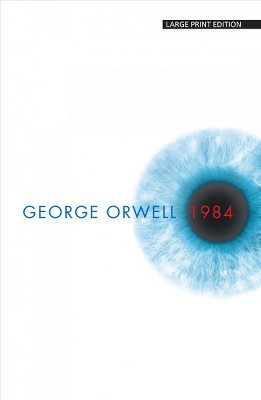
1984 is one of the finest works in its genre. The novel is set in a dystopian world ruled by a totalitarian regime that monitors every move and thought of its people. The ideas depicted throughout, with Winston Smith as the protagonist, are extraordinary.
BIG BROTHER IS WATCHING YOU!
The “Party,” led by the omnipresent Big Brother, forms the central pivot for all the good, the fear, and the obedience in this world. Everything that has happened in the past is recorded either inside a person as thoughts, or outside, in the form of words. What struck me most was the idea that if words are altered to change the past, and if the masses collude to make one doubt one’s own thoughts, you can change the past itself. The Party controlled every piece of content distributed to the lower class, the proles as they call them. Its four ministries (Love, Truth, Peace, Plenty) each dealt with the opposite of what their names suggested. The Telescreens vigilantly observed Party members for any deviation from propaganda; if one strayed, it was a Thoughtcrime. Ironically, even children betrayed their own families to the Thought Police, and the family was proud of it. A language called Newspeak was invented to restrict the very ideas one could express by shrinking the vocabulary.
Winston Smith worked in the Ministry of Truth, modifying newspapers and articles to alter the historical record. Yet he always believed that a better world had existed, one different from this world of fear, violence, and slavery. He follows his convictions, finds evidence, falls in love, and discovers a place with no telescreen, only to realize later that he was being played all along, and everything he had found and cultivated in his mind was orchestrated. After being caught, he endures harsh treatment in a cell with no light to gauge time. The interrogations and punishment are intended to cure him, to strip away his false thoughts, until he starts to believe that
Two plus Two makes Five.
Even after immense physical and mental torture, Winston still believed in his heart that they could not tear his inner self apart, that he remained true to his love, Julia. Eventually, his words betray him in a dream. The book presents the idea that even the most loyal and honest person cannot withstand a certain threshold of physical pain, that anyone would betray what they hold dearest when confronted with what they fear most. He is released with the expectation that he would love Big Brother one day. In the end, Winston no longer feels any connection to Julia. He dreams of looking at Big Brother, and his thoughts suggest that he loves him, illustrating, in the most devastating way, the victory of the Party over individuality.
The object of power is power. Power is in inflicting pain and humiliation. - George Orwell, 1984